
The short definition
Industrial outdoor storage (IOS) — sometimes called industrial service facilities — is low-coverage industrial land where the yard is the product. A representative site is one to twenty-plus acres, fenced and secured, with a stabilized surface and a small office or shop building occupying less than roughly 20% of the parcel. Tenants pay for usable acreage: room to park trucks and trailers, stack containers, stage equipment, or lay down materials.
That single distinction — land as the income driver rather than the building — changes everything downstream. It changes how rent is quoted, how a lender sizes a loan, which diligence items matter, and why a two-acre gravel yard beside an interchange can outearn a comparable-basis warehouse.
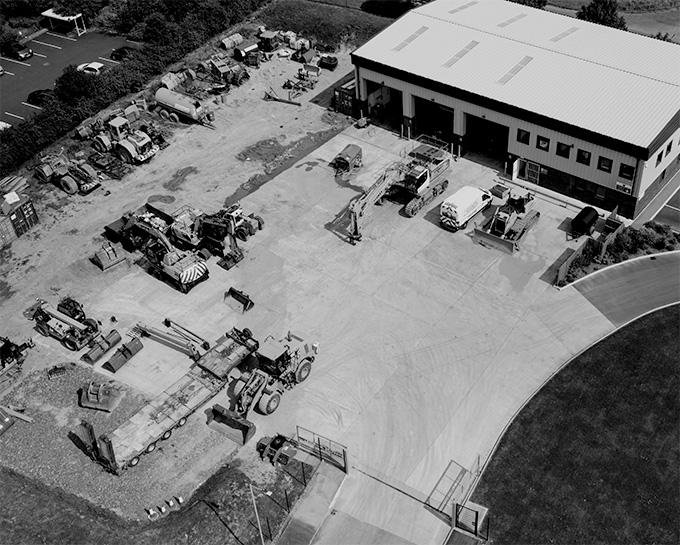
Why IOS became an asset class
Supply is structurally frozen. For two decades, municipalities have rezoned outdoor storage out of urban and inner-suburban markets — screening requirements, buffer setbacks, and outright prohibitions make new yards nearly impossible to entitle where demand is highest. Meanwhile, e-commerce, last-mile delivery, infrastructure spending, and supply chain reshoring pushed truck, trailer, and equipment counts up sharply.
The result is a sector with almost no new deliveries facing durable demand growth. Rents have followed, and capital that once ignored gravel yards — private equity, industrial REITs, family offices — now competes for them. What was a fragmented, largely owner-operated market as recently as 2019 now has dedicated funds, purpose-built platforms, and increasingly standardized underwriting.
Who uses IOS
Truck & trailer parking
Tractor-trailer staging, drop lots, and overnight parking near interchanges and distribution nodes.
Container & chassis storage
Port- and intermodal-adjacent yards handling empty container returns and chassis pools.
Construction & equipment yards
Heavy machinery, pipe, aggregates, and modular materials for contractors and infrastructure crews.
Fleet & last-mile depots
Infill sites with power, lighting, and driver amenities supporting 24/7 delivery operations.
Building materials & lumber
Distributors and suppliers needing covered racks plus large open laydown areas.
Vehicle & equipment rental
Rental fleets, towing operators, and auto storage requiring secured perimeters and high visibility.
How IOS is leased and valued
Rent is typically quoted per acre per month, or per square foot of usable yard, on a triple-net basis. Terms commonly run three to five years with annual escalations; tenants value flexibility and location over building finish. Because the improvements are minimal, releasing costs are low and downtime is usually short in supply-constrained submarkets.
Valuation follows the income, but the diligence that supports that income is unusual. Appraisers and buyers concentrate on the legal right to store outdoors, the share of the parcel that is actually usable after setbacks and drainage, surface condition and load capacity, secured perimeter, power and lighting, and truck ingress and egress. A site with five acres on the deed and three acres of usable, permitted yard is a three-acre asset.
What makes a strong site
- Zoning that permits outdoor storage by right — not a legal non-conforming use you inherit and can lose.
- Interchange, port, intermodal, or dense-population adjacency that shortens driver hours.
- A stabilized, well-draining surface: asphalt, concrete, or properly compacted aggregate rated for loaded trailers.
- Turning radii and gate placement that let a tractor-trailer enter, circulate, and exit without staging on public streets.
- Secured perimeter, lighting, and power sufficient for 24/7 operation.
- Clean environmental history, or a priced-in plan for remediation.
Risks worth pricing
Zoning and legal non-conforming use
Many operating yards are grandfathered rather than permitted by right. If use lapses or the site burns, the right to store outdoors can vanish. Always confirm current zoning text, conditional use permits, and any site plan conditions before closing.
Environmental condition
Decades of equipment storage, fueling, and maintenance mean Phase I reports frequently recommend a Phase II. Budget time and contingency dollars for subsurface work on older yards.
Surface and drainage capital
A yard that fails under loaded trailers is a re-tenanting problem, not a cosmetic one. Stabilization, grading, and stormwater compliance are the most common post-close capital items.
Tenant credit and specialization
Users skew toward trucking, construction, and equipment rental — cyclical businesses. Underwrite credit and replacement demand in the trade area, not just the in-place rent.
Common questions
What is industrial outdoor storage?
Industrial outdoor storage (IOS) is low-coverage industrial real estate where the land — not the building — is the income-producing asset. A typical IOS site is a stabilized, fenced, and secured yard of 1 to 20+ acres with a small office or shop building covering less than roughly 20% of the parcel, used for truck and trailer parking, container and chassis storage, construction equipment, building materials, or fleet operations.
How is IOS different from traditional industrial?
Traditional warehouse and distribution product is valued on rentable building square feet, clear height, and dock doors. IOS is valued on usable acreage, yard surface quality, truck circulation, power, and — above all — zoning that permits outdoor storage. Building coverage is intentionally minimal.
Why has IOS become an institutional asset class?
Municipalities have spent two decades zoning outdoor storage out of existence while e-commerce, last-mile delivery, and infrastructure spending drove demand up. That structural imbalance — effectively no new supply against growing demand — produced sustained rent growth and drew private equity, REITs, and family offices into a sector that was almost entirely mom-and-pop owned as recently as 2019.
How are IOS properties valued and leased?
Rent is usually quoted per acre per month or per square foot of usable yard on a triple-net basis, with leases running three to five years and annual escalations. Underwriting focuses on the legal right to store outdoors, surface condition (asphalt, concrete, or compacted aggregate), drainage, secured perimeter, and truck ingress and egress.
What makes a good IOS site?
Proximity to interstate interchanges, ports, intermodal yards, or dense population centers; heavy industrial (M-1/M-2 or equivalent) zoning with outdoor storage permitted by right; a stabilized and well-draining yard; adequate power and lighting for 24/7 operations; and turning radii that accommodate tractor-trailers without off-site staging.